
This was up 30 per cent from the same period last year, even as the number of frauds fell 2.8 times to 5,092.

Insurance intermediaries who receive disproportionately high commissions are likely to see a decline in their payouts, post the new Insurance Amendment Bill. The new Bill gives the Insurance Regulatory & Development Authority of India (Irdai) the power to disgorge unlawful gains made by insurers and intermediaries as well as the right to limit commissions paid to intermediaries.

The insurance industry is trying to get to grips with provisions in the proposed Insurance Amendment Bill, which gives additional powers to the Insurance Regulatory and Development Authority of India (Irdai), while there is ambiguity in the very definition of the insurance business, according to industry experts.

The Union Cabinet's decision to raise the foreign direct investment (FDI) limit in the insurance sector to 100 per cent is unlikely to significantly boost foreign investment as distribution remains a critical factor, requiring overseas players to partner with Indian businesses, experts said.

Tier-II, Tier-III, and rural regions accounted for 62 per cent of all new health insurance policies sold by insurers so far in 2025-26 (FY26), according to a Policybazaar report. These regions are also witnessing a rise in the sum assured opted by customers.
Both the life and non-life insurance segment posted over 20 per cent premium growth in November for the first time in this financial year (FY26), supported by the reduction in goods and services tax (GST) on premiums from 18 per cent to zero and a favourable base effect.

Bajaj Finserv - the holding company of Bajaj group's financial services business - has laid out plans for the next five years. During this period, it is eyeing 18-22 per cent compound annual growth rate (CAGR) in net profit at Rs 21,000-24,000 crore on a consolidated basis.

Fino Payments Bank (Fino) has become the first such entity to get an in-principle approval from the Reserve Bank of India (RBI) to transition into a small finance bank (SFB).
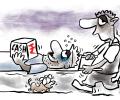
Recent years have been turbulent for the insurance industry due to direct and indirect tax reforms, regulatory overhaul and other external pressures. The events cumulatively slowed growth rate to single digits from the high teens seen earlier.

'LIC's investment decisions are taken independently, following strict due diligence, risk assessment and fiduciary compliance.'

'We've not seen a crypto exchange come back after about 45 per cent of the value on the platform was impacted.'

These losses increase insurance premiums for customers and reduce insurer margins on the other.

'This will bring in a lot of net new users to UPI.'

The DPDP rules, which have come into effect, require companies to implement a data protection and consent management system by November 2026.

Even as non-life insurers reported muted premium growth in October, standalone health insurers saw a robust 38 per cent year-on-year (Y-o-Y) surge. This growth was driven by pent-up demand in the retail health insurance segment.

Canadian firm Manulife and Mahindra & Mahindra (M&M), an Indian automaker with interests in financial services, have signed an agreement to form a 50:50 life insurance joint venture (JV) with a total capital commitment of up to Rs 3,600 crore each totalling Rs 7,200 crore.
Risk assessment platforms are increasingly using diverse data sources to help lenders identify groups attempting to access credit from regulated entities and to improve the process of evaluating new-to-credit (NTC) users.

The Reserve Bank of India's (RBI's) Payment Systems Report highlighted that between 2019 and 2024, credit card transactions doubled in volume and almost tripled in value. During the same period, however, debit card transactions witnessed a decline, both in volume and value.

For both polishing unit operators and diamond merchants, the US is still the biggest export destination: Three in every 10 diamonds polished in India end up in American stores.

The All India Insurance Employees' Association has opposed the government directive seeking to open up top posts in the state-owned insurers to the private sector, saying this would lead to greater private influence and "eventual privatisation".
 © 2026 Rediff.com - Investor Information - Advertise with us - Disclaimer - Privacy Policy - Sitemap - Feedback - About us - Terms of use - Grievances